It's Just A Label

A label begins as a description but rarely remains one. Once spoken aloud, it becomes part of the environment surrounding a child. The word settles into rooms, expectations, and decisions long before the child has had a chance to be seen.
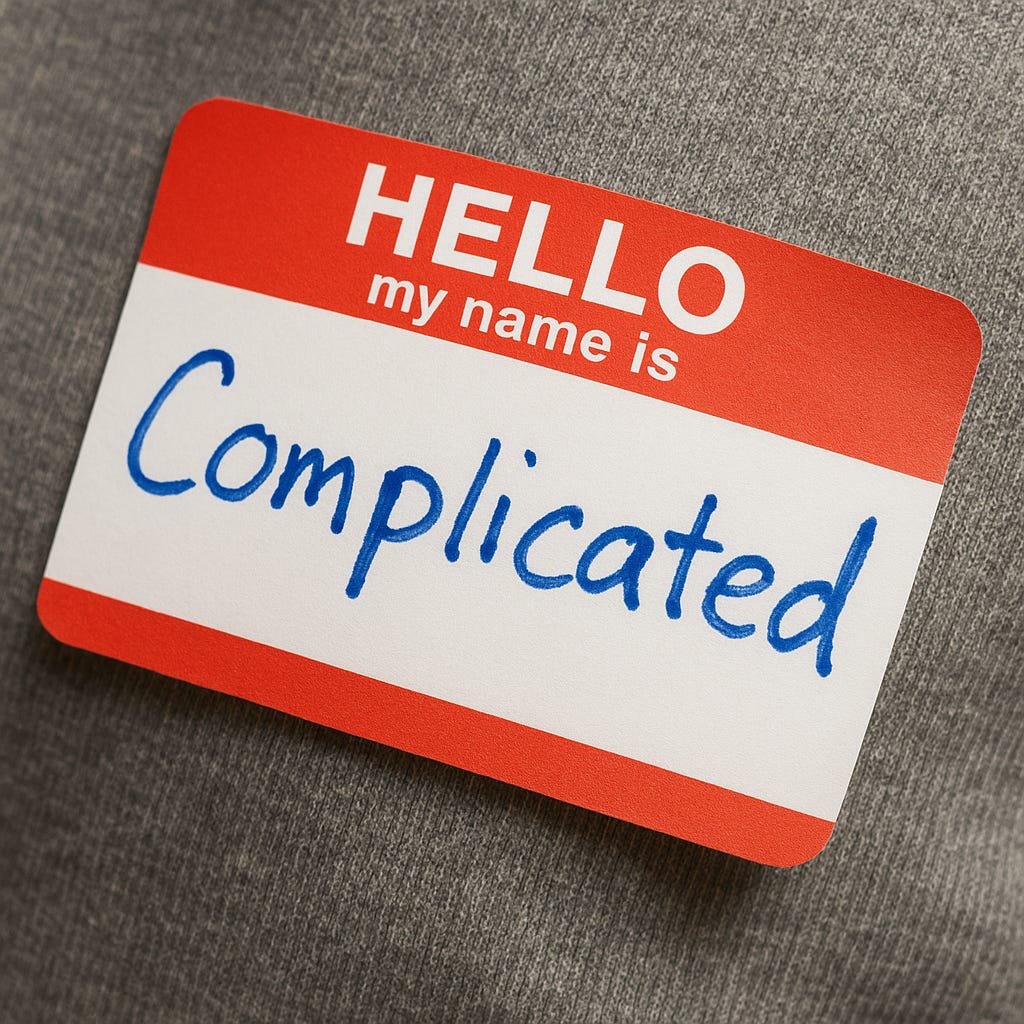
“It’s just a label.”
The phrase is offered as reassurance. A small sentence meant to soften the moment a diagnosis enters the room. It suggests that the word will sit quietly beside the child without changing anything important.
It suggests that whatever the child needed yesterday, they will need tomorrow, and the label is only a way of naming what was already there.
Adults say it to comfort themselves. They say it to make the idea feel lighter. They say it to imply that everything remains stable, that nothing has shifted, that the child will continue to be understood in the same way.
The reassurance is intended for the adult.
The consequences are carried by the child.
A label changes nothing about the child and everything about how the child is read. It does not describe a new reality. It alters the position from which adults interpret the one that already existed.
A label does not follow a child. It precedes them. It steps into the room before they do. It changes how they are interpreted long before anyone has spoken to them, watched them settle, or waited to see how the day unfolds.
Before the label appears, a child’s difficulties often remain unrecognised. A meltdown is treated as misbehaviour because the adults around them can only see the surface. A shutdown is mistaken for refusal. Anxiety is described as sensitivity or a phase. A child who holds themselves rigid in public is praised for coping.
The effort required to maintain that appearance is invisible, so the distress underneath is treated as absent. The child is read through what is comfortable for adults to believe, not through what the child is experiencing.
Some behaviours are dismissed until they can no longer be ignored.
A meltdown that was treated as attitude becomes an emergency once it disrupts the environment around it. The same behaviour is trivial in one moment and critical in the next, depending not on the child but on the adults’ threshold for acknowledging need.
A child who has been struggling for months appears to “suddenly” deteriorate, even though nothing sudden has happened. The unreliability lies in interpretation, not in the child.
When behaviour is tolerated only after it becomes disruptive, the child learns that need is only recognised at breaking point. A difficulty must become crisis before it is believed. The line between the two is drawn by adults, not by the child living inside it.
Once the label is given, everything shifts. The child has not changed, but the adults around them have. The word becomes an explanation for things that once required attention. It becomes a shorthand for tendencies, limits, and assumptions. Adults treat the label as if it were a description of certainty rather than a point of reference.
Variability complicates the picture further. Children who share the same label do not share the same life. One may speak fluently, regulate well and remember social rules. Another may struggle with noise, routine and sudden change.
The label suggests similarity when the reality is variation. Some adults expect the label to predict the child. When the child does not match the assumed profile, the variation is interpreted as inconsistency rather than individuality.
The expectation that one child should resemble another comes from the label, not from the children themselves. The category suggests uniformity and adults follow its instruction.
The child who falls outside the imagined pattern is treated as unpredictable, even though nothing unpredictable has occurred.
New difficulties are absorbed into the diagnosis before anyone asks whether they belong there. Behaviour that would invite investigation in a child without a label is attributed to the condition in a child who has one.
This is diagnostic overshadowing: everything is folded into the category, even when the category does not fully explain the moment. The child discovers that the word meant to clarify them is also used to conclude them.
Once the diagnosis exists, the boundary between explanation and assumption becomes thin. The label is used to account for reactions that would once have prompted concern. Patterns that require investigation are instead absorbed into what is already known.
The presence of one condition does not preclude others—a child with autism may also experience anxiety, physical illness, trauma, or developmental changes that warrant separate attention. Good practice requires differential reasoning: investigating whether new difficulties are expressions of the known condition or indicators of something additional.
Yet adults use the label as a shortcut. Everything is attributed to what has already been diagnosed. The diagnosis expands to fill the space where curiosity should be.
Behind these interpretations stands the parent. They have no choice but to repeat the label because support depends on it. Without the word, needs that are immediate are treated as uncertain. With it, the system acknowledges a responsibility to respond. The parent speaks the label because silence is misread as coping.
This is not reduction. It is the only available route to recognition in systems that respond to terminology before they respond to need. The parent must use the category to access what the child requires, even knowing that the category will reshape how the child is seen.
They watch the label do two things simultaneously: open doors to support and close space for the child to be understood outside its terms. The word grants access and alters interpretation. It is both necessary and limiting, and the parent cannot refuse it without refusing what the child needs.
This necessity makes the label more visible than the child. Once the word is spoken, it travels. It appears in conversations, forms, meetings and plans. It shapes expectations before the child has been observed. The parent’s act of protection becomes the frame through which the child is encountered.
It is often assumed that the child is understood before they have had the chance to show anything of themselves. The label becomes the starting point. The child meets the world through assumptions that arrived ahead of them.
They become known second and labelled first.
The child is recognised, but not always understood. The familiarity adults feel toward the label replaces the unfamiliarity they might have felt toward the child. Understanding is assumed, not earned. The word stands in for the work.
When the label functions well, it sharpens rather than replaces observation. Adults use it to ask better questions: What does this child need in this moment? What works for them that might not work for another child with the same diagnosis? How can the environment be adjusted to reduce rather than accommodate distress?
In these instances, the label serves its intended purpose. It provides context without determining conclusion. It explains patterns without exhausting possibility. It opens routes to support while preserving space for the child to be seen as themselves.
But this requires adults to treat the diagnosis as a reference point rather than a destination—to remain curious about the particular child in front of them even after the category has been named. It requires ongoing attention rather than settled understanding.
The difference is not in the label itself but in how it is held. The same word can be used to deepen understanding or to foreclose it. The outcome depends on whether adults recognise that the label names a category, not a child.
In public spaces, the label encounters a different kind of interpretation. People rely on their own experience to decide what difficulty looks like. Conditions they do not recognise are treated as exaggerations. Support is interpreted as generosity. Assistance is read as advantage.
This misreading has a structure. Those who have never required help measure fairness by comparing what is received, not what is needed to participate. They see the child who leaves class early to avoid overwhelming transitions and conclude that child has been given freedom others are denied. They see extended time on assignments and interpret it as leniency rather than access.
The comparison is between the support itself and its absence, not between the child’s starting position and their peers’. A child who begins further from the standard requires more to reach it. Support does not elevate them beyond their peers—it brings them to where others already stand.
But this is invisible to those who’ve never experienced the gap. From their position, help looks like extra rather than essential. The child appears to receive something additional when they are actually receiving something foundational. Access is misread as excess.
The standard remains where it always was. Only the cost of reaching it changes. Support allows participation rather than privilege, but the distinction collapses for anyone measuring only what is given rather than what is required.
The idea that equality demands bringing one child down to match another never enters the room. Support is imagined to move in one direction: upward. The fact that it moves toward a stable point—the baseline others reach without effort—is lost.
This framing affects how strangers interpret the child. A child who needs structure is described as demanding. A child who needs space is seen as indulged. A child who cannot cope with noise is treated as dramatic.
The public commentary surrounding support becomes the background against which the child is judged. The reaction is directed at the adults, but the consequences settle on the child.
The child notices these interpretations even without the language to name them. They see the adults who hesitate before responding. They sense which explanations are accepted and which are doubted. They recognise when their behaviour is treated as manageable and when it is treated as a problem.
They understand that the same need can be ignored in one context and described as severe in another. They experience the gap between what they feel and what others believe.
They learn that interpretation can outweigh experience. They see that adults place more weight on what should be happening than on what is happening. Over time, they adapt to the understanding that their inner state is not always the deciding factor in how they are treated.
Compliance complicates this further. A child who masks in school is considered coping, yet the exhaustion that follows is seen as disproportionate. When the effort can no longer be sustained, the collapse appears abrupt.
In many settings, the visible moment is treated as the whole story.
The unseen effort is lost.
What remains is a single visible moment that carries the weight of hours. The child pays for the distance between appearance and reality, not because the effort was hidden, but because adults mistook silence for ease.
The label is used to explain the collapse rather than the strain that preceded it.
A label is meant to protect. It provides a framework for understanding and a route to support. Yet it also reshapes how the child is seen—altering expectations, influencing judgement, settling into the language people use to describe them.
The protection the label offers depends on whether adults treat it as context or conclusion.
“It’s just a label” suggests the word will sit quietly beside the child. In practice, it arrives before they do. It becomes the lens through which they are viewed, the explanation that replaces observation, the shorthand that forecloses questions that should still be asked.
A label should clarify need. Too often, it clarifies only the assumptions of the adults who use it.
Whether it succeeds depends on whether adults treat the word as the beginning of understanding or the end of it.
As always your observations are astute and heartbreaking simultaneously.